A laptop backpack is not a bag with a laptop sleeve in it. It is a bag whose dimensions were decided by the laptop, and most people buy the wrong size because they measure the screen instead of the machine.
Measure the laptop, not the screen
A 16-inch laptop is not 16 inches wide. The screen diagonal is 16 inches; the body is roughly 14 inches across once you account for bezels, and about 0.7 inches thick once you account for the lid and the base. Those are the numbers that decide whether a bag’s sleeve fits, and no product page gives you the sleeve’s internal dimensions in a way you can trust.
So measure your own machine — length, depth, thickness, with a ruler, not with the spec sheet — and add a centimetre on each axis for a sleeve that will not require force. A bag that fits exactly is a bag you will stop using, because every insertion becomes a negotiation.
The second measurement is your back. A 20-litre bag on a 165cm frame sits differently than on a 185cm frame, and the strap length is the spec that almost never gets published. If the straps cannot be shortened enough, the bag rides low and the weight moves off your shoulders onto your lower back, which is the actual cause of “heavy backpack” complaints.
| Lenovo B210 | hk Slim laptop backpack | |
|---|---|---|
| Stated laptop fit | 15.6 in class | Slim 15.6 in class |
| Form factor | Traditional two-compartment | Slim, low-profile |
| Opening | Zip-around | Zip-around, narrow profile |
| Best for | Books, charger, lunch, daily commute | Laptop, charger, documents only |
| Price | See button | See button |
These two sit at opposite ends of the same question: how much bag do you want to carry?
1. Lenovo B210: the commuter’s bag
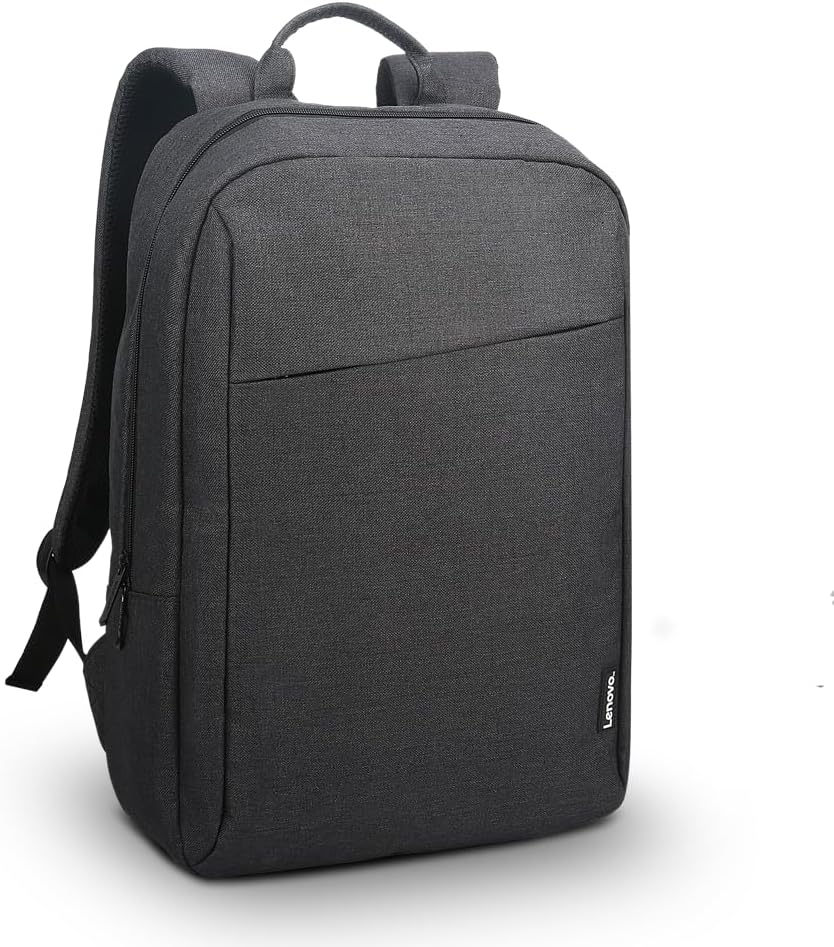
A traditional two-compartment 15.6-inch bag: laptop sleeve, a main compartment for books or a change of clothes, and enough structure that it stands up when you put it down. This is the shape to buy if the bag’s job is getting a laptop, a charger, and lunch from home to an office without looking like hiking gear.
Its limitation is the same as its virtue: bulk. A structured bag that holds a lunch box is a bag that is noticeably big on a nearly empty day.
Buy it if you commute with more than a laptop. Skip it if you carry a laptop and nothing else.
Check current price on Amazon →Paid link · we earn a commission if you buy, your price does not change
2. hk Slim: the one for a laptop and a charger, and that is it

A slim 15.6-inch profile that lies flat against your back. This is the bag for the person whose daily carry is genuinely a laptop, a cable, and a phone — and who is tired of carrying a bag that looks half empty.
The trade is obvious: no room for a jacket, no room for a lunch box, and a narrow profile that makes a thick 16-inch machine a tight fit. Check the internal depth against your laptop’s thickness before committing.
Buy it if your carry is minimal and you want it to look it. Skip it if you ever need to add a second pair of shoes.
Check current price on Amazon →Paid link · we earn a commission if you buy, your price does not change
What to check before you buy any of them
Four things, in this order: internal sleeve dimensions against your measured laptop; strap length at its shortest against your torso; whether the bag stands up on its own (a bag that falls over is a bag that gets put down hard); and whether the laptop compartment is suspended off the bottom, because that foam gap is the difference between a drop and a broken screen.
The bag that passes all four is the right bag, whatever the listing says about its “TSA-friendly” design.