This is the question people actually ask before they spend money, and it has a short answer and a long one. Short: on a subway, a sealed in-ear pair with active noise cancelling blocks far more low-frequency noise than any open-ear design can, and nothing about tuning changes that. Long: the reason is a seal, not a chip, and once you understand which part of the noise is being stopped by physics and which by electronics, you can decide how much blocking you actually want — because blocking has a cost, and that cost is usually the thing people forget to price in.
The short answer, before the details
If your commute is mostly underground, in a loud carriage, for more than twenty minutes each way, buy a sealed in-ear pair with ANC. If your commute is a walk plus a short ride, and you need to hear announcements, traffic, or a colleague saying your name, buy open-ear. If it is both, the honest answer is one pair of each, or a hybrid model that switches modes, and I will come back to that at the end.
What follows is why, in terms a non-audio person can use.
Noise is blocked two different ways, and only one of them needs a seal
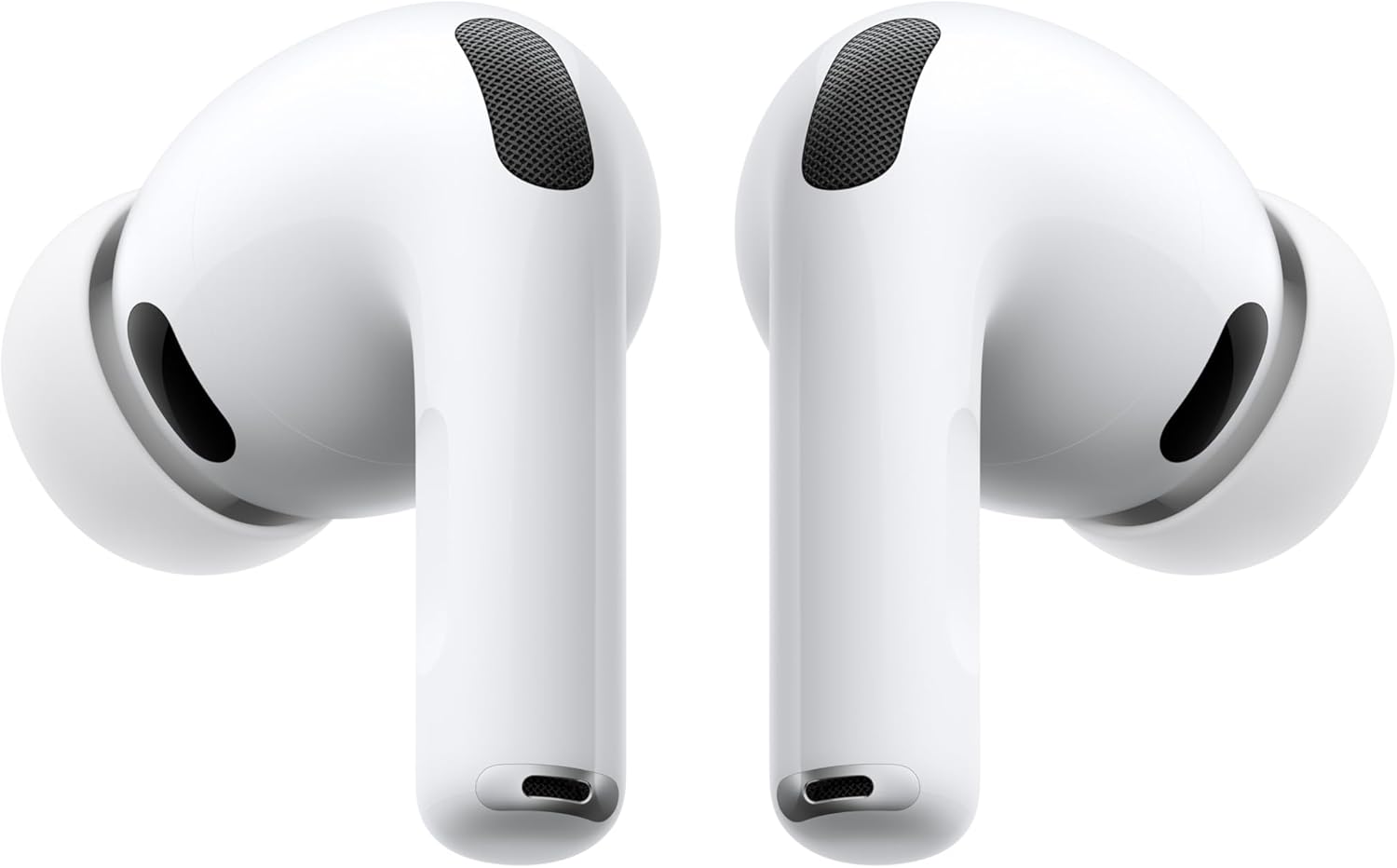
Passive blocking is mechanical. A silicone tip pushed into your ear canal closes the opening that sound travels through, and everything above roughly 500 Hz drops sharply — the hiss of rails, the shriek of brakes, the chatter around you. This part works with the earbuds switched off, and it works in proportion to how well the tip seals your ear, which is why two people in the same carriage can have completely different experiences with the same pair.
Active cancelling is electronic, and it is aimed at the opposite end of the spectrum. A microphone hears the low rumble, a processor generates an inverted copy, and the two cancel in your canal. That is why ANC is so effective on a train: most of the annoyance underground is 100 to 400 Hz rumble, exactly the band that a passive seal handles worst and that ANC handles best.
An open-ear pair has neither. No seal by design, and almost no ANC by design, because cancelling noise at the ear while leaving the canal open is a much harder engineering problem than it sounds. Shokz, soundcore and Bose all sell open-ear models that claim some form of call-noise reduction, but that is speech processing for the microphone, not attenuation for your ear. Anyone who tells you their open-ear pair “blocks noise” is describing the volume they are playing at.
So what does an open-ear pair actually buy you
Three things, and they are real.
Safety. You hear the platform announcement, the cyclist behind you, the car reversing. For a bike commute this is not a comfort feature, it is the reason to buy the category.
No occlusion. Nothing is inside your canal, so there is no pressure, no thumping of your own footsteps, no increase in ear wax, no wet-tip problem after a sweaty ride, and no need to clean a mesh filter every few weeks. People with narrow canals or a history of ear infections tend to last longer with open-ear than with in-ear, in my experience talking to them, and it is a large part of why the category grew.
Glasses and long wear. A hook that sits behind the temple beats a tip that fights your canal for eight hours straight. The Shokz OpenFit 2 weighs 9.4 grams per bud and, on the basis of its own published numbers, runs 11 hours per charge and 48 with the case; the hook is nickel-titanium wrapped in silicone, so it bends to your ear instead of pressing a fixed curve into it.

The two designs on paper
Below is what each manufacturer publishes, not what I measured. Treat the battery figures as the manufacturer’s ceiling, because they are measured at moderate volume with default settings.
| Shokz OpenFit 2 (open-ear) | Apple AirPods Pro 3 (in-ear) | |
|---|---|---|
| How it sits | Hook behind the ear, driver outside the canal | Silicone tip sealed in the canal |
| Seal | None, by design | Passive seal plus electronic cancelling |
| Noise approach | Awareness first; music has to outrun the room | Apple claims up to twice the noise removal of Pro 2, with transparency mode when you need to hear |
| Battery (published) | 11 h per charge, 48 h with case | Substantially less per charge; the case carries the rest |
| Weight per bud | 9.4 g | Lighter, but the tip is doing part of the work |
| Water | IP55 | Rated for sweat and rain by Apple |
| Amazon rating base | 4.4 stars on 3,574 ratings | 4.4 stars on 17,860 ratings |
The rating bases are the interesting column. The AirPods sit at #1 in Amazon’s headphone chart with a review base roughly five times larger, and both land on 4.4 stars. That does not tell you which is better; it tells you how much real-world mileage is behind each number. A 4.4 on seventeen thousand ratings is close to a settled fact about the product. A 4.4 on three and a half thousand is a solid signal about a younger product.
A sixty-second test you can run yourself, without equipment
If you own both types already, this settles it faster than any review. Stand on a platform, put on the sealed pair with cancelling on, and play nothing. Then switch to the open pair and play nothing. The difference you hear in the rumble is passive plus active attenuation, and it is large. Then play music at a comfortable level on each and count how many times you have to raise the volume on the open pair to understand a podcast. That number is the real cost of awareness.
If you do not own both, the same test works in a store with a demo pair, or on a busy street: put on the open pair and try to hold a conversation at normal volume while music plays at 50 percent. If you can, awareness works for you. If you cannot, you are paying for a feature you are not getting.
Where each one falls apart
Open-ear falls apart in exactly one common situation: a loud, enclosed, low-frequency environment where you want to listen to something else. Underground carriage, plane cabin, a workshop with machinery. There is no tuning trick for this. If that is your commute, an open pair will have you turning the volume up until the music is louder than the room, which is worse for your hearing than a sealed pair at half volume.
In-ear falls apart in three. First, fit: if the tip does not seal your canal, you get neither the passive blocking nor a clean ANC baseline, and the pair becomes an expensive open-ear with worse comfort. Second, occlusion and hygiene over long wear. Third, and this is the one nobody mentions, situational awareness on a bike: transparency mode is good, but it is a microphone and a speaker reproducing the world, not the world itself, and there is a delay worth knowing about before you trust it at a junction.
The hybrid answer, if your commute is genuinely both
The compromise that has appeared in the last two years is a sealed pair that can open up, or an open pair that can shut down. soundcore’s AeroFit 2 Pro is the clearest example in the open-ear family: it keeps an open mode for the walk to the station and adds a shallow noise-cancelling mode for the ride itself. It is not as quiet as a dedicated sealed pair with deep cancelling, and the ratings on it are noticeably weaker than on the standard AeroFit 2, so it is a compromise rather than a solution — but for a two-part commute it is the only single-pair answer that does not require you to give up one half of the trip.
FAQ
Does playing music louder make an open-ear pair block as much noise as ANC? It can mask the noise, but masking by volume is not blocking, and it costs you hearing over years. This is the single most common thing people get wrong about the category.
Are bone-conduction pairs different from open-ear? Yes. Bone conduction sends vibration through your cheekbone and leaves the canal fully open, which is even better for awareness and even worse for bass and for loud rooms. The trade-off is steeper, not different in kind.
Will ANC give me pressure or headaches? Some people report it, particularly with strong cancelling on a quiet room. It is individual and it is the main reason to buy from a place with a return window rather than trusting a review, mine included.
Bottom line
For blocking noise on a subway, sealed in-ear with ANC wins and the margin is not close. Physics does the work, and no open-ear model can substitute for a seal it does not have. Buy open-ear for awareness, long wear, glasses, and ear-canal comfort, and accept that in a loud carriage it is a music player competing with the room rather than a quiet room you carry with you.
Two products, one decision: the pair that keeps you aware is the Shokz OpenFit 2, and the pair that makes the carriage quiet is the AirPods Pro 3. If you can only buy one, buy the one that matches the worst twenty minutes of your day, not the average.
Check current price on Amazon →Paid link · we earn a commission if you buy, your price does not change
Check current price on Amazon →Paid link · we earn a commission if you buy, your price does not change